
Hamilton Township City Directory Collections
Hamilton Township was often reached through Trenton and Mercer County commercial publishing rather than through a single township volume. The New Jersey State Library bibliography identifies the publisher and years, while Trenton repositories keep shelf lists and selected scans. Treat those finding aids as a way to choose a volume, not as a roster. The table separates documented runs from phonebook series, because a directory year and a telephone year do not answer the same question.
| Hamilton-area collection | Documented years | Where held | How to use it |
|---|---|---|---|
| Fitzgerald’s Trenton/Mercer directories | Approximately 1887–1935 | New Jersey State Library bibliography | Use the bibliography to identify the volume, then consult the holding collection. |
| Polk Trenton directories | 1948, 1950, 1952, 1954, 1955–56, 1957–58, 1960, 1962, 1963, 1965–67, 1970–71 | New Jersey State Library | Check the exact year and its geographic heading. |
| Trenton Public Library directories and phonebooks | Selected directory and phonebook runs through 2020 | Trentoniana shelf list | Request the listed volume or ask about its available format. |
| Trenton Historical Society directory index | 1920 index; selected earlier Trenton volumes | Trenton Historical Society | Use the web index to locate a category or page path. |
The title on a spine may say Trenton even when the useful entry is under Mercer County outside Trenton, a suburban heading, or a rural route. That publishing pattern explains why a Hamilton Township search should begin with the collection title and the year, then test more than one locality label.
Hamilton Township Historic Directory Publisher Runs
Fitzgerald’s Trenton/Mercer sequence is the main starting point for Hamilton-area rural and suburban communities in the late nineteenth and early twentieth centuries. It runs approximately 1887 through 1935. Later holdings include a Huston volume for 1946 and Polk Trenton volumes in the specific years listed by the State Library and the Trenton Public Library. A 1966 Polk Trenton Suburban volume is especially useful because its stated scope includes Hamilton Square, Mercerville, and parts of Hamilton.
Do not turn that scope into a promise that every household appears. Publishers selected their coverage, a listing could be compiled before the printed year, and a missing line can reflect an unlisted telephone, a rural route, a spelling variation, or no entry. Preserve the volume title, publisher, year, and page with every note. That small record lets another researcher return to the same historical directory volume instead of relying on a transcription alone.
Note: The documented Polk list contains individual years and short runs, so gaps between listed volumes should be treated as gaps until the holding institution confirms otherwise.
Hamilton Township Historic Directory Search Tip
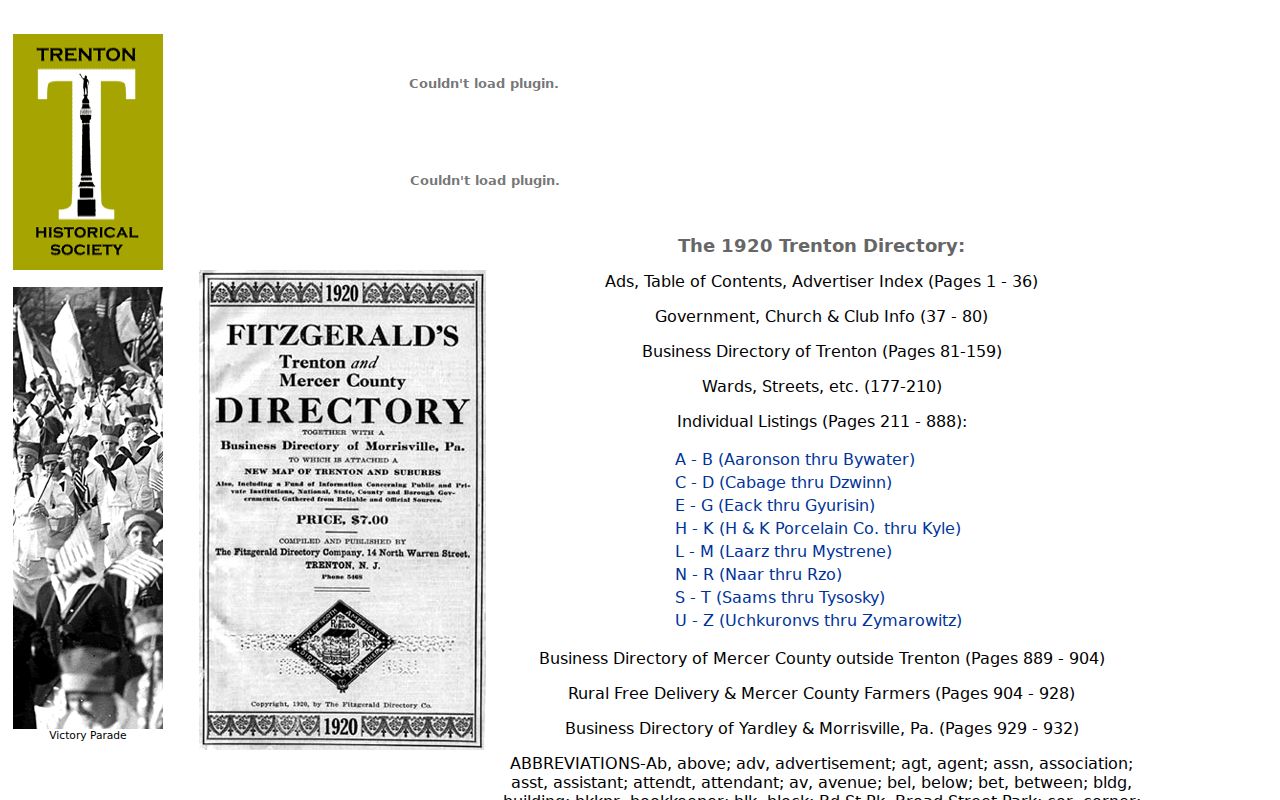
Insider tip. The Trenton Historical Society’s 1920 directory index is more than a surname route. Its categories include advertising, government, church and club material, business, wards and streets, Mercer County outside Trenton, rural free delivery, and farmers. For a Hamilton Township question that fails in a Trenton street list, the outside-Trenton, rural-delivery, and farmer paths can be the better first check.
The indexed categories show the structure of a 1920 publication, not a modern resident list. Start by recording the category and the exact spelling encountered, then examine the related directory page or volume under the repository’s access rules.
The 1920 Trenton Historical Society index supplies the category-level route for Mercer County research.
That approach is useful for an old business, farm, organization, or address trail. It does not establish that a person lived at the same place after the 1920 snapshot.
Hamilton Township Historic Directory Label Myth
Myth. An older Hamilton Township household must appear under the modern township name. The township history identifies Nottingham, Mercerville, and Hamilton Square as historic local names. Nottingham was renamed Hamilton in 1842, so an earlier place label can be correct even when it does not match a modern search filter. Commercial publishers also used Trenton, Trenton suburban, and Mercer County headings for the surrounding area.
Search the surname with each village name, and search a distinctive street or farm name separately. Try a first initial and spouse or business name where the entry model supports it. The Hamilton history resource and the Historical Society timeline can help date a place name before the directory search begins. Keep the historic spelling in notes rather than silently changing it to the modern form.
Reading a Hamilton Township City Directory Entry
A period entry is compact, so read the heading and abbreviation key before copying a line. The documented Hamilton-area field model can include a surname with forename or initials, occupation, street address, telephone information, and sometimes a household role. A person may also be cross-listed in a resident section, business section, or a street and address section. Capture what the volume actually prints, including punctuation and abbreviations, instead of filling in unprinted relationships or ownership.
| Name form | Surname plus forename or initials as printed, useful for searching variants. |
|---|---|
| Occupation or business | A work or business description when the publisher included one. |
| Street line | Street number and name, which should be checked against the year and locality heading. |
| Telephone or household detail | Information that may appear in some runs, not a universal field. |
| Volume reference | Publisher, directory year, page, heading, and exact entry spelling. |
- Criss-cross directory
- A directory section arranged by street or address rather than by surname, when that volume includes one.
- Householder index
- An index organized around household names, when supplied by a publisher; verify its scope in that volume.
- Abbreviation key
- The publisher’s explanation of shortened marks and terms, usually read before interpreting a line.
Note: A directory year is a compiled snapshot, so use a record’s own date when comparing it with a deed, census, or vital record.
Hamilton Township Historic Directory Shelf Routes
The Trenton Public Library’s directory and phonebook shelf list is the most direct way to check whether a requested title and year are known there. It lists Fitzgerald, Huston, Polk, farm and business directories, plus several Trenton and suburban phonebook series. The county’s genealogy links point outward to the State Library, State Archives, Mercer County Library System, Trentoniana, Hamilton, Princeton, Pennington, and Hopewell resources.
Hamilton Library is a separate local-history route. Its FAQ lists the library at 1 Justice Samuel A. Alito Jr. Way, Hamilton, with local-history contact through the historian at extension 4016. Ask what is cataloged and whether a directory, clipping, finding aid, scan, or supervised shelf consultation is available. For state-level genealogy work, the New Jersey State Archives genealogy collections provide a distinct catalog, microfilm, and reproduction path.
These channels serve different needs. The State Library bibliography is best for identifying a title and year. The Trenton shelf list helps locate an available local copy. The Historical Society index can point to a category within a period directory. Hamilton Library can help with village context, old roads, family names, clippings, photographs, and local publications that refine a request. Archives are the fallback for older state collections or a record type that the commercial directory never contained. Ask each repository whether an item is a scan, microfilm, catalog entry, or supervised shelf copy before making a trip.
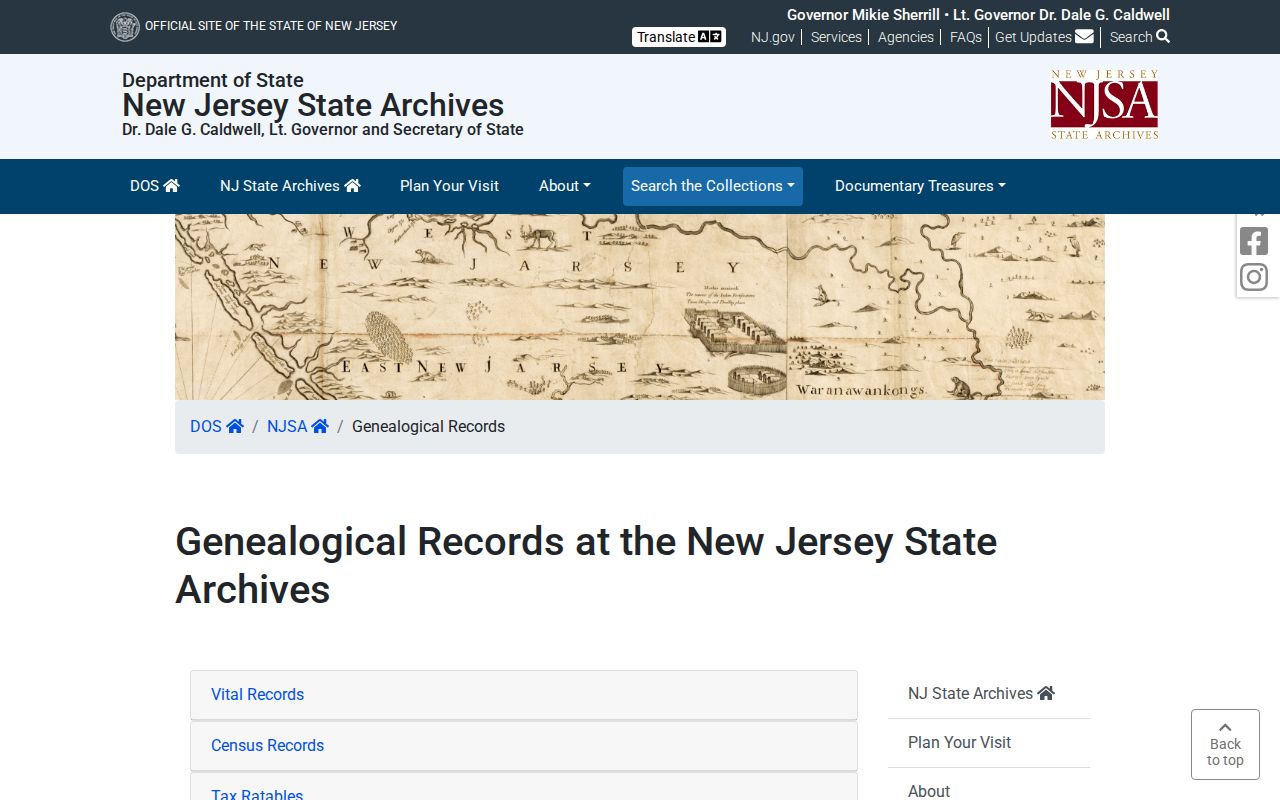
The New Jersey State Archives genealogy collections are a separate confirmation route when local shelves do not answer a historical question.
Hamilton Township Directory Timeline
The available shelf evidence supports a short timeline of collection changes. It is a research calendar, not a claim that every volume covers every Hamilton Township address. Pair the date on the physical or scanned source with the locality heading before using it in a household history.
- 1842: Nottingham is renamed Hamilton, a place-name change that affects later search terms.
- Approximately 1887–1935: Fitzgerald’s Trenton/Mercer directories form the core early directory run.
- 1946: The Trenton Public Library shelf list identifies a Huston directory.
- 1966: Polk Trenton Suburban explicitly includes Hamilton Square, Mercerville, and parts of Hamilton.
- 1950: The latest publicly released federal census offers a household check beside period directories.
The date sequence is also a reminder that a collection is not the record itself. The catalogue tells where to look. The printed page, census image, or recorded instrument supplies the dated evidence.
Using Hamilton Township Historic Directories for Family History
Follow a household through the Hamilton Township directory collections one volume at a time. Begin with the clearest known name and year, then record the street line, occupation or business detail, and any phone or household notation exactly as printed. A later or earlier entry becomes more useful when a census or deed supplies a dated second source. The National Archives identifies the 1950 Census search as the latest publicly released federal census; OCR can misread both surnames and street numbers, so compare the image and nearby household entries.
- Choose a documented directory year and search the surname, initial, village label, and business name as needed.
- Record the volume, page, spelling, street, and any occupation or household detail.
- Check the next available year rather than assuming the collection is annual or continuous.
- Pair a near-by directory year with the 1950 census household, allowing for indexing errors and release gaps.
- Use a deed, tax card, or archive record to corroborate an address and time range before making a title or residence claim.
A line that disappears may reflect a move, death, unlisted service, rural delivery, a compilation delay, or a changed spelling. For the backward trail of a single parcel, use the Hamilton Township past residents route to connect the household layer to the Mercer deed chain without confusing a listing with ownership.