
Hamilton Township Previous Residents Sources
A backward address trail uses different records for different questions. The Mercer County Clerk establishes recorded transactions. A city directory or phonebook can place a listed household at a street line. The federal census can test a household composition for a released year. Maps help translate an old road or farm clue, while Hamilton permit records can date work at a parcel. None of these sources alone identifies every person who lived at an address, so the strongest result is a dated match across more than one source.
| Source for the era | Documented coverage | Where to reach it | What it can show |
|---|---|---|---|
| Mercer County land records | County records from 1838; deeds online from January 1839 in the 2023 scan release | RecordsNG and County Clerk | Recorded parties, instrument details, dates, and legal descriptions. |
| Hamilton-area directories | Title-specific runs, including Fitzgerald approximately 1887–1935 | State Library and Trenton repositories | Period listing, street, and other printed entry details. |
| Federal census | 1950 is the latest currently public federal census | National Archives | Released household information, subject to indexing errors. |
| Historic map sources | 1875 atlas; 1927 Trenton-organized Sanborn volume | Library of Congress | Landowner, road, or built-environment context. |
| Hamilton permits and tax-map route | Date depends on the requested municipal record | Construction, Assessor, and map resources | Dated construction or parcel reference, not a resident list. |
Begin with the last recorded deed when the question is about the parcel. Begin with a directory or census when the question is about a household. Then join the trails by date, street, legal description, and locality label rather than by a name alone.
Confirm Hamilton Township Address Records
Freeze the present-day address before searching for past residents. The USPS ZIP Lookup can standardize a street suffix, unit, and postal label, but postal city is not legal proof of municipality. Confirm the situs address, block, lot, PIN or PAMS reference, and map sheet through the Hamilton maps page, the Assessor route, or New Jersey GIS. Hamilton-area mail can carry a Trenton or another postal label near a boundary, while the county land record may use a different legal description.
Write both forms down if they differ: the current mailing address and the historic or legal description. A block and lot can survive a street renumbering or a changed postal city better than a simple text search. Parcel polygons are useful for orientation, but New Jersey GIS cautions that they are not legal boundaries or surveys. For an old property, also save the village label, such as Nottingham, Mercerville, or Hamilton Square, because it may be the term an older directory or map used.
Note: A complete address worksheet should preserve the street form, municipality, block and lot, map reference, time range, and any historic locality name.
Hamilton Township Previous Residents Deed Chain
The Mercer County Official Records Public Search is the core source for the recorded land chain. Select town Hamilton, then add block and lot or a legal-description detail when known. The portal allows party, document type, date, consideration, instrument number, book and page, municipality, block and lot, and legal-description searching. Use the current or most recent recorded deed to identify the transaction, then work back through the earlier party and instrument. Keep the portal’s date label, because an instrument date and recording date can differ.
- Confirm the address, parcel identifiers, and legal description from the tax-map or GIS route.
- Find the latest relevant deed in RecordsNG and record its parties, date, instrument number, book and page, consideration if shown, and legal description.
- Identify the grantee and grantor roles in that deed before deciding which earlier transaction to seek.
- Search the prior party as a grantee, use a date range around the likely purchase, and widen the search for surname variants, estates, trusts, partnerships, or corporations.
- Repeat the documented transaction trail backward, then request or inspect the image when the index leaves a question unresolved.
- Grantor
- The party transferring a recorded interest in a deed.
- Grantee
- The party receiving that recorded interest at the time of the instrument.
- Chain of title
- The linked sequence of recorded land transfers for a parcel or legal description.
- Legal description
- The parcel wording in the instrument, often more durable than a street number over long periods.
Hamilton Township Deed-Party Myth
Myth. A deed party proves who lived at the address. It does not. A grantee receives a recorded interest, but the same parcel trail can name a mortgagee, lender, assignee, trustee, executor, attorney-in-fact, lien claimant, easement holder, or corporate representative. A mortgage release marks an encumbrance event, not a move-out. A tax sale records a legal process, not a household roster.
Read the document type and party role before treating a name as an owner, and separately test whether a household source supports presence at the address. Mercer flags also matter: * signals a party status other than verified V or B, R means replaced, and C means correction. Preserve those marks in notes and locate the related record before accepting a name or legal description as final.
Note: A recorded deed supports a dated property interest; a directory, census, or other dated household source is needed before claiming occupancy.
Hamilton Township RecordsNG Research Access
Insider tip. Online search is not the only Mercer route. The County Clerk’s 2023 digitization release reports more than one million historic property records and 1,214 scanned books, with county records from 1838 available online and deeds reaching January 1839. If a historic volume is not exposed, use the current result, preserve the instrument or book and page, and contact Indexing and Imaging rather than assuming the record does not exist. The earlier county notice describing a roughly 1997 online reach belonged to an older access product, not the later scanning landscape.
The Clerk’s land-record office keeps the Records Room open for inspection and lets staff explain the computerized index, but staff do not conduct title searches. Identified instruments can be copied through the Clerk using current instructions and fees. The FamilySearch Mercer deeds catalog also identifies deed and index microfilm runs, with originals noted at the Mercer courthouse. This counter, microfilm, image, and copy path is important when a public result is incomplete or a flag needs review. The ordinary public Mercer Property Information Portal is closed under Daniel’s Law, so use the Clerk and municipal office routes lawfully instead of trying to reconstruct protected information.
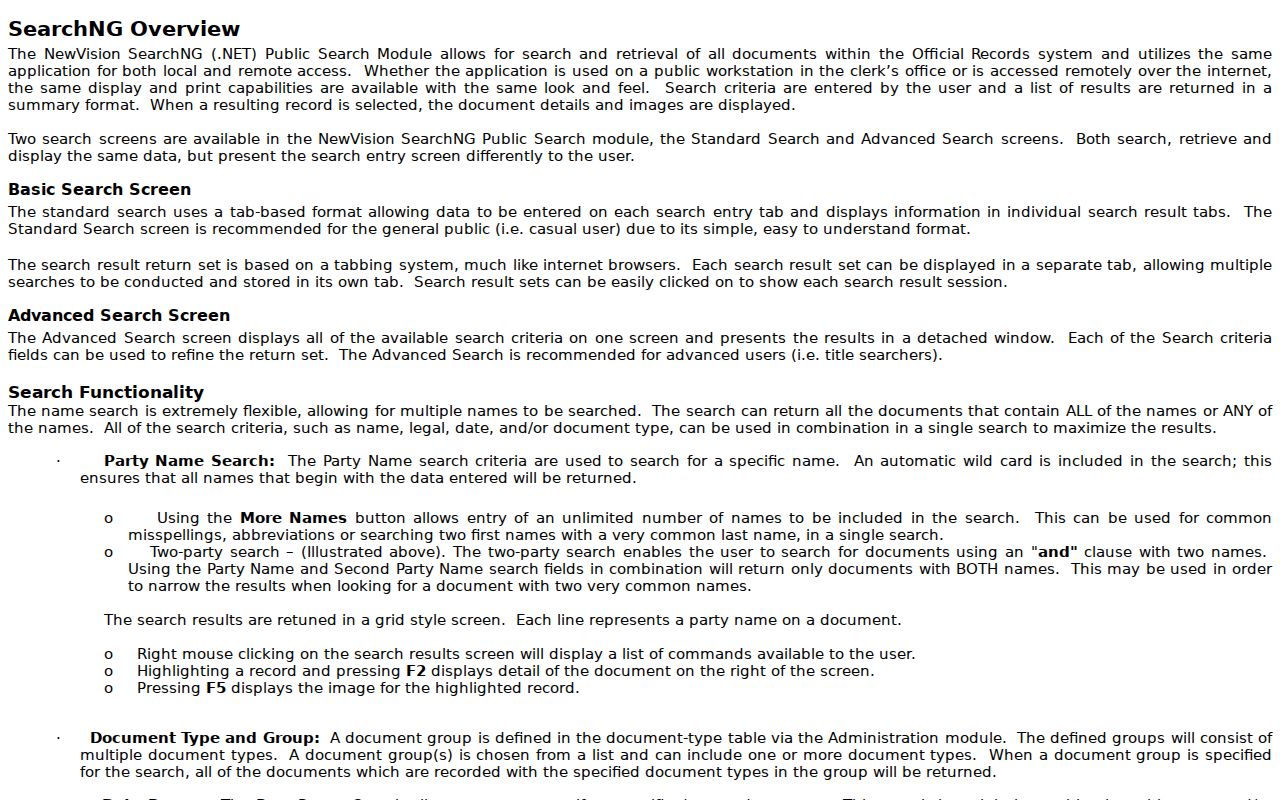
The Mercer RecordsNG help describes the standard and advanced search path from result summary to record details or images.
Hamilton Township Historic Resident Directories
Directory street and address sections can add the household layer that a deed chain lacks. Look for the exact number, street spelling, village label, telephone detail, and household role that the volume actually prints. Fitzgerald’s Trenton/Mercer directories, Polk volumes, Trenton-area phonebooks, and the 1920 index use different organization and geographic headings. The collection years, shelves, and entry-reading method are set out in the Hamilton Township city directory collections; for an address trail, the useful task is to compare a period line with the parcel’s dated transaction.
Missing listings need a neutral reading. They can reflect rural delivery, unlisted service, compilation lag, a spelling change, or no entry. Test Hamilton Square, Mercerville, Nottingham, Trenton suburban, and Mercer County outside Trenton where a time period supports those labels. A directory year is a snapshot that may have been compiled earlier, so note its year beside the recording date on a deed rather than treating the two dates as interchangeable.
Hamilton Township Historic Resident Households
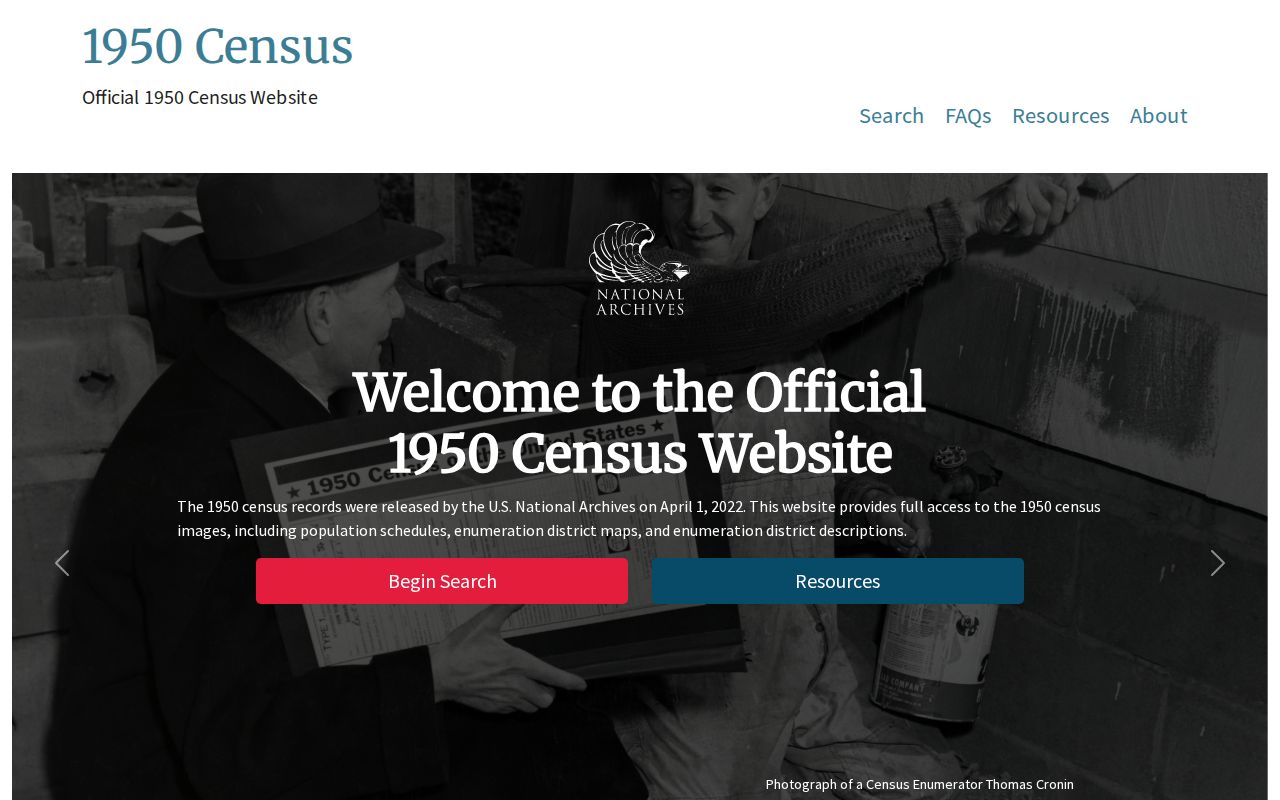
Pair a directory line with the National Archives 1950 Census search for a household check. The 1950 census is the latest federal census currently released to the public under the 72-year rule. Search the head of household, then compare household members and the address with care. Optical character recognition can misread surnames and street numbers, and many intermediate decades remain outside the current public release cycle. A census result therefore needs the same date-and-place discipline as a deed result.
- Choose a directory entry close to the period being researched and transcribe the address and locality heading.
- Search the household name in the 1950 census, allowing for initials, spelling variants, and OCR mistakes.
- Compare members, street information, and place labels against the directory rather than relying on one matching surname.
- Place the confirmed household beside the nearest recorded deed date, while keeping ownership and occupancy as separate facts.
- For an earlier gap, use Archives or genealogical collections and state clearly which years and variants were checked.
A death notice or obituary can offer a later family lead, but it should be compared with the dated directory, census, probate, or vital-record evidence rather than treated as address proof on its own.
The National Archives 1950 Census search provides the latest publicly released federal household census route.
Hamilton Township Address-History Maps
The 1875 Everts & Stewart atlas can supply a farm, landowner, road, or neighborhood clue that improves a Mercer deed search. It should not be used as a current ownership source. Transcribe the map’s place and name exactly, then search the deed index for a matching legal description or time range. An old landowner label is a starting point, not proof that the same person stayed on the parcel.
For built-environment context, the Library of Congress 1927 Sanborn volume is organized around Trenton and lists Hamilton as a secondary location. No standalone Hamilton Sanborn set was located. That limitation matters: use a map page only after confirming that the address or area appears, and do not promise coverage for every Hamilton Township street.
Hamilton Township Property Records: Permit and Probate Dates
Hamilton construction records can date an addition, conversion, or other address event. The EZ Permit file can contain proposed work, permit status, parcel information, and approval details. It can help place a physical change in the property timeline, but an applicant, agent, or certification signer is not automatically an occupant. Ask Construction or the appropriate municipal office for releasable records by exact address, block and lot, date range, and record type.
Probate can explain why a deed chain changes names. The Mercer County Surrogate handles estate administration, heirs, and probate services; its online estate information may have a delay and should be verified with the court or in writing. A docket can identify an executor, beneficiary, or prior address subject to redaction or sealing. Compare those roles with the deed’s grantor or grantee, but do not assume that all named heirs lived at the property.
Hamilton Township Resident-Record Limits
A house-history search should stay narrow and respectful. Use records for family history, estate questions, property history, or verifying a dated public claim. Record an uncertainty when the source is incomplete, and respect redactions, sealed matters, address-confidentiality protections, and the limits of an index. An old directory, map, or deed should never be used to work around a protected present-day address.
Lawful use. Hamilton Township previous-resident research is for personal, lawful historical and property questions; do not use records or old listings to harass, track, or harm any person.
For a negative result, record the repository, volume or index category, years, search spelling, and village labels tried. That makes a later search more useful and avoids turning an unlocated entry into a claim that a person was never there.